Objectives
After a breakin, I wanted to add more home security features to my Homeassistant dashboard, I tried a few things, one of them was Microwave Proximity sensors. I intended to integrate it with Homeassistant, so it can be used both as a presense detector and an intrusion warning when the alarm was activated.
I laid out a simple little PCB in Kicad while I waited for some Microwave proximity sensors to arrive that I ordered When I got the sensors and tested them on a breadboard, they were so sensitive they detected the neighbours through the wall. Thus they were unsuitable for this design. I ended up using basic PIR sensors instead that didn't need a PCB.
Working Principles
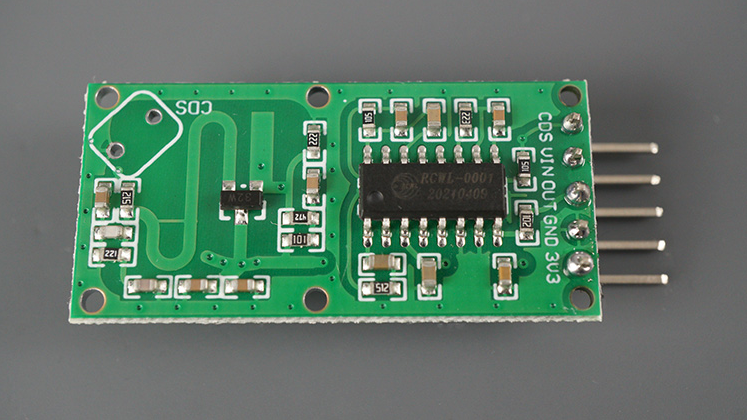 Microwave proximity sensors use the same technology that Radarr systems use for airplanes.
They emmit a radio wave, usually in the GHz range.
They then detect the reflection of that wave when it hits an object and bounces back to the sensor,
There's usually a small change in frequency or a time delay(Time of Flight) or a amplitude change(The sensors
I used used the amplitude)
There's a small potentiometer to change the sensitivity in some cases.
This board is relatively simple. It is high if no detection is made, and pulls low when a detection is made.
Microwave proximity sensors use the same technology that Radarr systems use for airplanes.
They emmit a radio wave, usually in the GHz range.
They then detect the reflection of that wave when it hits an object and bounces back to the sensor,
There's usually a small change in frequency or a time delay(Time of Flight) or a amplitude change(The sensors
I used used the amplitude)
There's a small potentiometer to change the sensitivity in some cases.
This board is relatively simple. It is high if no detection is made, and pulls low when a detection is made.
ESPHome Configuration
Below is a simplified ESPHome configuration used to control the RGB lighting via PWM outputs.
esphome:
  name: livingroom-prox
  friendly_name: LivingRoom-prox

esp8266:
  board: esp01_1m

# Enable logging
logger:

# Enable Home Assistant API
api:
  encryption:
    key: "REDACTED"

ota:
  - platform: esphome
    password: "REDACTED"

wifi:
  ssid: !secret wifi_ssid
  password: !secret wifi_password

  # Enable fallback hotspot (captive portal) in case wifi connection fails
  ap:
    ssid: "Livingroom-Pir Fallback Hotspot"
    password: "REDACTED"

captive_portal:

one_wire:
  - platform: gpio
    pin: GPIO2

binary_sensor:
  - platform: gpio
    pin:
      number: GPIO0
      mode:
        input: true
        # pulldown: true
    name: "KITCHEN MICROWAVE"
    device_class: motion
Key Components
- ESP8266 - ESP-01 microcontroller and WIFI board
- RSWL 0516 - Microwave Proximity Sensor
- AOZ1280 - Switching mode power supply
- LM1117 - Linear power supply
- Resistors, capacitors, connectors, inductors (standard passives)
Results & Insights
Ultimately the project was a failure, and I used purchased PIR sensors rather than DIY devices.
I learned about the practical limitations of microwave proximity sensors and will use this knowledge for the day when I find a use for them that suits their capabilities.